"Ninety days isn't enough. It just isn't."
That's Historic District and Historic Properties Commission chair Lori Fusco, arguing last year that Wilton's town-wide waiting period on tearing down old buildings should be doubled. The Board of Selectmen didn't go along with her, at least not on that point. But the debate itself tells you something most buyers researching antique Wilton homes never find out: the 90-day rule everyone assumes only applies to designated historic districts actually applies to almost any old building in town, whether it sits in a district or not.
If you're circling a listing described as "Antique" or "Colonial farmhouse" in Wilton, that distinction is not academic. It's the difference between a 30-day close and a project that stalls before you've picked paint colors.
The Rule Nobody Reads Until They're 60 Days From Closing
Wilton's Ordinance Concerning Stay of Demolition of Historic Buildings gives the town's Historic District and Historic Properties Commission the authority to review demolition requests for any structure larger than 500 square feet and more than 50 years old, regardless of where in Wilton it sits. If the commission decides the building has historic, architectural, or cultural significance, it can delay demolition for up to 90 days while someone tries to find an alternative to tearing it down.
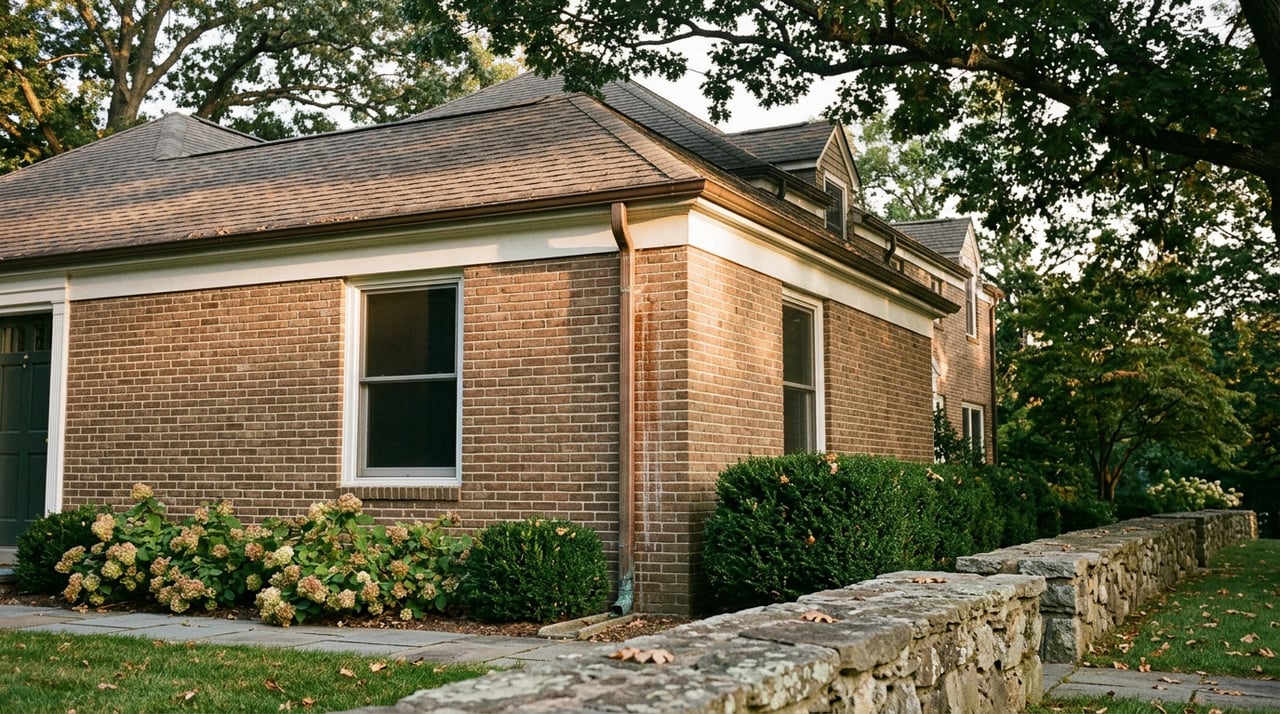
That threshold, 50 years and 500 square feet, sweeps in a huge share of Wilton's housing stock. It is not limited to the town's five local historic districts, among them Lambert Corners and the Georgetown Neighborhood of Church Street. It applies to the barn behind your prospective house, the wing you were planning to remove for an addition, and the farmhouse itself if it predates 1976.
The rule doesn't block a project outright. As the town's own page on the ordinance puts it, the process "does not prevent demolition, it simply delays it," and it has previously enabled old buildings to be moved to new sites or dismantled and rebuilt as part of a renovation rather than lost entirely. But a 90-day delay layered onto a financing timeline, an inspection period, and a contractor's schedule is not a rounding error.
Historic District Is a Narrower Category Than "Historic"
Fusco's frustration during the ordinance debate pointed at a real source of confusion: people conflate "in a historic district" with "old enough to matter." Wilton's Historic House Survey lists nearly 500 significant buildings, compiled by architectural historians in surveys conducted in 1989 and 2018 with state preservation grants. Only a fraction of those buildings sit inside one of the town's five formal historic districts. The rest are subject to the town-wide demolition-delay ordinance instead, which is exactly the mechanism that can catch a buyer off guard, because there's no district sign on the property, no overlay on the tax map that jumps out during a quick search, and no requirement that a listing agent flag it.
During the same debate, Fusco cited the John C. Wally House at 232 Danbury Road, tied to the Wilton Volunteer Ambulance Corps, as an example of the kind of property where this review matters. Planning and Zoning Commission chair Rick Tomasetti pushed back from the other direction, arguing the existing 90-day window already "limits certain freedoms" for owners and that stretching it to 180 days would be "onerous."
Neither side disputed how rarely the delay actually gets used. According to reporting on the November 2025 Board of Selectmen meeting, the commission has invoked it only three times since late 2013. That's the number worth sitting with. A rule that fires once every few years is easy to dismiss as irrelevant, right up until it applies to your closing.
The Selectmen ultimately split the difference: they kept the 90-day cap but gave the commission more room to work, extending its internal review window from 10 to 35 days so it has time to decide whether a given demolition request warrants a closer look. The 180-day proposal was dropped, at least for now, but Fusco has said the commission may revisit it.
What's Actually Under the Lawn
Most of Wilton's antique housing stock predates municipal sewer service, which means septic and well systems are the rule, not the exception, for exactly the properties this piece is about. Wilton's own Sanitary Code sets specific mechanical requirements that surface as inspection items on nearly every antique-home contract: no septic system can be covered before the Town Sanitary Authority inspects and approves it, no well can be dug without a permit application on file, and no well can be constructed within 75 feet of any discharge point from a sewage-disposal system.
Connecticut's Public Health Code and its 2024 Technical Standards govern the underlying design statewide, and the basics are consistent across the region: tank capacity starts at a 1,000-gallon minimum, rising to 1,250 gallons if the home has a garbage disposal, with 1,250 to 1,500-gallon tanks typical for four- to five-bedroom houses. Sizing is tied directly to bedroom count, which means an antique farmhouse advertised with a converted attic or a finished barn apartment may need a system upgrade simply because the buyer's intended use adds bedrooms the original 1890s design never accounted for.
A Fairfield County septic firm licensed to work in the area describes the terrain here as "the challenging geography of Southwestern Connecticut," a reference to the ledge rock and variable soil conditions that can extend the site-testing process well beyond a standard perc test. Anderson Septic Service, a family-run installer that has served Wilton for decades, advises buyers to request design plans, soil test results, permits, and as-built drawings during due diligence, not because a lender requires it, but because those documents determine whether a future repair or resale goes smoothly or turns into a repeat of the same discovery process.
Why a 27-Day Market Makes This Worse, Not Better
Here's where the timeline pressure compounds. SmartMLS data reported in local market coverage put Wilton's median sale price at $1,345,000 as of August 2026, with homes averaging 27 days on market and 2.6 months of supply in July 2026. Sellers were getting 109.5% of list price that same month, and prices were up 4.5% year over year. Zillow's separately calculated measure, which tracks estimated value rather than actual sale price, put the average Wilton home value at $1,292,518 as of July 31, 2026, up 7.5% over the prior year, with homes going to pending in around 12 days.
Those two speed numbers, 27 days to a closed sale versus 12 days to pending, aren't contradictory. They're measuring different stages of the same transaction, and both point the same direction: this is a market where buyers feel pressure to move fast and waive whatever they can.
That's precisely the wrong instinct for an antique property carrying septic, well, or demolition-delay exposure. A commission review, a full septic replacement, or an extended perc test does not compress to match a competitive offer deadline. The properties most likely to reward patience during due diligence are the same ones the current market is pushing buyers to rush.
Before You Waive Anything
A short list worth working through with your agent and inspector before removing contingencies on an antique Wilton property:
- Confirm the age and square footage of the main structure and any outbuildings, since the 500 square foot and 50-year thresholds apply independently to barns, guest houses, and additions.
- Ask whether the property or any structure on it appears in Wilton's Historic House Survey, separate from whether it sits in one of the town's five historic districts.
- Request septic design plans, the most recent as-built drawing, and pumping records, and confirm tank sizing against your intended bedroom count.
- Verify well-to-discharge distance if there is any secondary structure with its own system, since the 75-foot rule applies property-wide, not just to the primary residence.
- If any part of your renovation plan involves removing a structure over 50 years old, build a 90-day contingency into your timeline rather than assuming it won't apply to you.
A Few Questions Buyers Ask Late in the Process
Does the demolition delay apply if I'm only planning a partial teardown, not removing the whole house? Yes. The ordinance covers a building "or part thereof," and partial demolition applications go to a review committee appointed by the Wilton Historical Commission.
Can I get a waiver if the house isn't actually historically significant? The Building Inspector can make a written finding that a structure doesn't meet the threshold for historic, architectural, or cultural significance, which waives the delay. If neither the Historic District Commission nor the Wilton Historical Society responds within 10 days of notice, approval is presumed.
What happens if the septic inspection turns up a failing system during my option period? It's more common than buyers expect on properties this old. Local installers have described finding original systems at risk of failure that required full replacement before a buyer could move in, work that can typically be scoped and quoted during inspection so it's negotiated into the deal rather than discovered after closing.
An antique home in Wilton is not a riskier purchase than any other property in Fairfield County. It's a purchase with a different set of timeline variables, and the buyers who do well are the ones who build those variables into their offer instead of discovering them during attorney review.
If you're weighing an antique property in Wilton or anywhere else in Fairfield County, Barbara Sweeney Homes can walk through what a specific property's age, systems, and district status mean for your timeline before you write an offer. Work with Barbara and schedule a free consultation.